Connect
Sign up to receive our monthly newsletter.
Inquiries
Have a question? Contact us here.
Job Opportunities
Learn about job openings.

Digital Public Goods Alliance - 2026
Sign up to receive our monthly newsletter.
Have a question? Contact us here.
Learn about job openings.
Director of Communications and Programs, DPGA Secretariat
11 posts
November 11, 2026
Four Additional Digital Public Goods Join the DPGs for Climate Action Collection
The urgency of the climate crisis demands that effective digital solutions reach more people faster than ever. Yet efforts are too often fragmented, with organisations duplicating work and countries facing barriers to accessing and adapting the tools they need.Digital public goods offer a foundation for more collaborative climate action. Their open nature allows governments, researchers and communities to integrate, adapt and improve existing solutions rather than start from scratch. They can be tailored to local needs and designed to work with new and existing systems, helping turn shared knowledge into wider impact.The DPGs for Climate Action Collection, co-stewarded with the Climate Technology Centre and Network (CTCN) and the UNFCCC Technology Executive Committee, was launched in April 2026 to make such systems easier to discover, evaluate, and deploy.As world leaders gather in Türkiye for COP 31, we are excited to welcome four new digital public goods to the Collection:ClimWeb (standardised weather and hazard communication)PRISM (anticipatory-action risk analytics)National Carbon Credit Registry (sovereign carbon credit registries)Climate Action Data Trust (carbon market data interoperability)They join the first cohort of Prospect, Energy Access Explorer, Rural Environmental Registry, and GeoPrism Registry, bringing the Collection to eight solutions and extending it into early warning, anticipatory action, and carbon markets. Each has been assessed against all four layers of the DPGs for Climate Action Identification Framework: DPG Standard verification, climate relevance, infrastructural approach, and measurable outcomes. Learn More About the New SolutionsClimWeb: Climate Information for Millions Who Had No Digital ChannelBefore the WMO Regional Office for Africa began rolling out ClimWeb to national weather services, more than half of Africa's national meteorological and hydrological services had never issued a standardised public warning, and around half had no digital channel at all to reach the public. A January 2024 baseline found that 85% had no website or one with very limited functionality.ClimWeb, a platform purpose-built for national weather services, changed that by giving every service the same things at once: a modern public website, standardised early warnings in the Common Alerting Protocol (CAP) that flow automatically to Google Public Alerts and the global alerting network, and a shared catalogue of global forecast products. No licence fees, no vendor lock-in: each service owns and runs its own instance.Four years on, 34 national platforms are live across 31 countries. More than 3,600 CAP alerts have been issued since 2022, from a near-zero base, and, counting the Red Cross societies, disaster agencies and other institutions that relay national warnings, about 41.8 million people now receive climate and early-warning information through channels that have been built up since the programme began.ClimWeb's work was recognised with two UN 2.0 Innovation Awards in June 2026.PRISM: From Satellite Data to Action, Before Disaster HitsFor communities in the path of a flood, a drought or a cyclone, the difference between disaster and safety is often measured in days or less. But turning raw climate and satellite data into a warning early enough to act on is hard, and national agencies often lack the tools to do it. Too often, assistance arrives after the damage is done.PRISM is a geospatial platform that turns hazard and forecast data into decision-ready risk indicators, and publishes alerts when forecast thresholds are met. That is the trigger point for anticipatory-action protocols that release assistance and mobilise agencies before an event rather than after. Built on open geospatial standards with a per-country deployment model, it builds this capacity inside national meteorological and disaster-management agencies, so that they run it themselves.Seven countries (Cambodia, Sri Lanka, Mozambique, Malawi, Zimbabwe, Zambia and Tanzania) now run national climate-risk monitoring on PRISM. National Carbon Credit Registry: Sovereign infrastructure for Climate FinanceUnder Article 6 of the Paris Agreement, any country can trade carbon credits to help fund its climate action. But to do so, it needs a national registry, the foundational digital ledger that authorises, tracks and reports every issuance and transfer. Without one, a country cannot authorise transfers, apply corresponding adjustments, or prevent double counting, and is effectively locked out of Article 6 carbon finance. For many developing countries, that infrastructure simply did not exist.The National Carbon Credit Registry (NCCR) is a toolkit that lets any government set up its own sovereign carbon registry: nationally owned, nationally controlled, no licence fees. It operationalises the Article 6 rules directly: tracking the full credit lifecycle from registration and authorisation through issuance, transfer and retirement on an immutable ledger, serialising credits in the UNFCCC's ITMO identifier format, preventing double counting, and generating the Agreed Electronic Format reports countries must submit each year.Three countries (Namibia, Côte d'Ivoire and Nepal) now run live sovereign registries, with Sri Lanka, Nigeria, Zimbabwe, Mongolia, Cambodia and Chile adopting and Rwanda, Peru and Ukraine scoping. Developed under the Digital For Climate (D4C) collaboration with EBRD, UNFCCC, IETA, the European Space Agency and the World Bank Group, NCCR means that each of these countries can now take part in climate finance on its own terms, owning the infrastructure rather than renting it, and directing the finance to climate action at home.Climate Action Data Trust: Bringing Trust to Carbon MarketsCarbon markets have a fragmentation problem. More than fifty crediting programmes are in operation, each with its own registry, methodology and data taxonomy, and no shared view across them. That makes it hard for any government or oversight body to verify credits across systems or to identify where double counting might occur, and without that confidence, carbon markets cannot become the trusted, scaled-up finance mechanism for climate action they are meant to be.The Climate Action Data Trust (CADT) is a harmonised metadata layer that connects carbon registries into a single transparent view. It does not replace the registries; it reconciles their data to a common standard, so credits can be traced, compared and checked for double counting across systems that could never talk to each other before. Its data model v2.0, now rolling out, incorporates all five tables of the Agreed Electronic Format for Article 6.2 reporting, and the team is co-leading a new ISO data standard for carbon credit data.Twelve registries are now connected, including the World Bank's CATS, the UNFCCC CDM, Verra and Gold Standard, and the public transparency dashboard has drawn over 6.3 million visits. Bhutan runs CADT as the public face of its national registry, and in 2026 CAD Trust completed its first pilot of government UNFCCC reporting using registry data aggregated on the platform. When carbon markets can be trusted, the finance that funds climate action can flow.What's next for the CollectionWith eight solutions now in the Collection, we are turning to two priorities:Welcoming Open Climate DataThe Collection has so far focused on open-source software. Next, the collection will work towards including open datasets. In order to begin admitting open datasets into the Collection, the DPGs for Climate Action Identification Framework will be updated to indicate what bar will be set for datasets to ensure they have utility to potential adopters, particularly in regard to interoperating and integrating with other DPG types, including AI systems and software. This update will be grounded in consultations with product owners and data users on what makes climate data useful in practice: not just publicly accessible, but standardised, well documented, regularly maintained, and openly licensed for reuse.Growing the PipelineLooking beyond existing solutions listed in the DPG Registry, we are actively scouting open-source climate solutions and encouraging them to pursue DPG verification. If you build or maintain one, we invite you to explore the DPG Standard, consider applying, or contact us.
April 24, 2026
Launching the DPGs for Climate Action Collection
At the Digital Public Goods Alliance, we are committed to improving how digital public goods are discovered and adopted—helping governments and organisations identify trusted, open solutions that can support their digital transformation efforts.Recognising that many countries are actively advancing digital public infrastructure, the DPGA previously launched the DPGs for DPI Collection to help point governments and organisations toward relevant, proven digital public goods they can adopt.Building on this approach, we are pleased to introduce the DPGs for Climate Action Collection. Launched on April 17 at the Climate Technology Centre and Network (CTCN) and UNFCCC Technology Executive Committee (UNFCCC TEC) Joint Advisory Board meeting in Incheon, South Korea, this new collection highlights digital public goods with a proven track record of supporting climate mitigation and adaptation, while demonstrating the ability to interoperate. This is critical, as it signals that solutions can be adopted as building blocks—stacked and integrated to deliver greater impact.Co-stewarded with the CTCN and the UNFCCC TEC, all solutions included in the collection must meet the DPGs for Climate Action Identification Framework. This ensures that solutions are not only DPGs, but also relevant, proven, and designed to scale.A collection alone is not a silver bullet, but it provides a foundation for further work, including:Increasing the discoverability of vetted, high-impact toolsHelping funders and implementers identify solutions to support and scaleHighlighting gaps where open solutions do not yet existIncentivising more projects to become digital public goodsStrengthening understanding of how open solutions can advance climate actionThe collection launches with an initial cohort of solutions, including tools supporting energy planning, geospatial data integration, and environmental monitoring. Solutions will continue to be added on a rolling basis.By making it easier to find, assess, and adopt proven digital public goods, we aim to accelerate the role of open, interoperable technologies in addressing the climate crisis.

January 30, 2025
Digital Commons and Digital Public Goods – Finding Common Ground for Policy-makers
Authors: Liv Marte Nordhaug – Digital Public Goods Alliance Secretariat CEO & NGI Commons DCTF Member, Nicholas Gates – Open Forum Europe, NGI Commons This article is co-written by the Digital Public ...

December 18, 2024
Exploring the Potential of Digital Public Goods to Spur Climate Resilience
Author: Jameson Voisin, Director of Programs and Communications, Digital Public Goods Alliance Secretariat Digital public goods (DPGs) are playing a pivotal role in tackling some of the world’s most p...

November 26, 2024
Highlights from the DPGA Annual Members Meeting in Singapore
Author: Lucy Harris, COO and Interim Director of Membership, DPGA Secretariat Earlier this month, the Digital Public Goods Alliance hosted its 2024 Annual Members Meeting (AMM) in Singapore, bringing ...
November 13, 2024
The DPGA Annual Members Meeting Kicks Off in Singapore by Welcoming Three New Members!
Each year, the DPGA Annual Members Meeting brings together members to strengthen the collective ability to discover, develop, use, and invest in digital public goods. This year’s event, co-hosted by D...
November 6, 2024
New Report Highlights Role of Digital Public Goods for Climate Action
Data Privacy Brasil has released a new report examining the role digital public goods (DPGs) and digital public infrastructure (DPI) could play in addressing and adapting to climate change. This repor...
September 24, 2024
Press Release: 50-in-5 Milestone Event Illustrates How to Implement the New Global Digital Compact Safely and Inclusively
Press ReleaseNew York City, September 23, 2024 — Today, the 50-in-5 campaign, an initiative that seeks to help 50 countries design, launch, and scale components of their digital public infrastructure ...
December 7, 2022
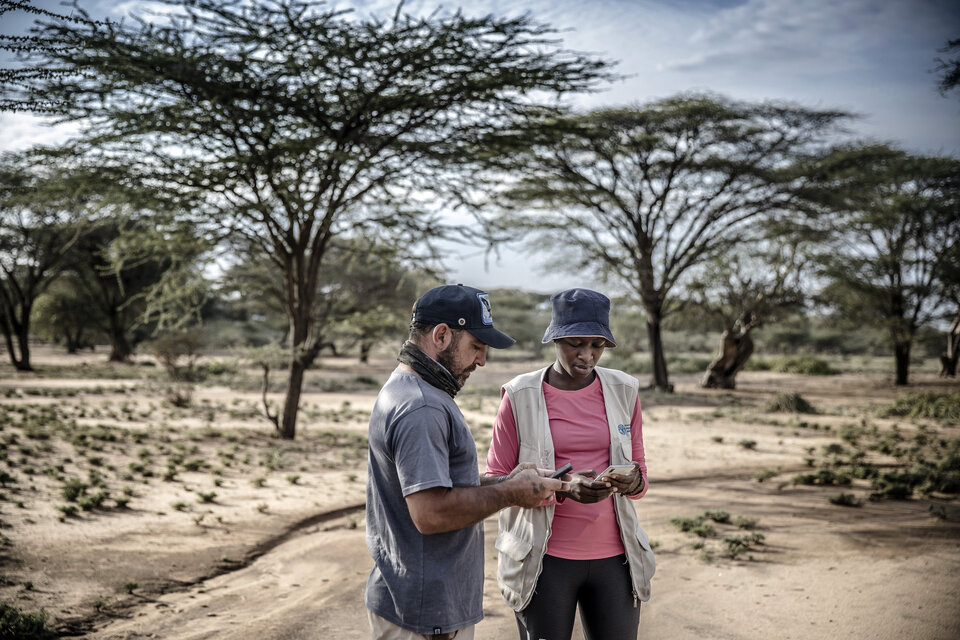
Call for Submissions of Open Agricultural Advisory Services
The Digital Public Goods Alliance’s Food Security Community of Practice, co-chaired by the Norwegian Agency for Development Cooperation (Norad) and the Food and Agriculture Organization of the UN (FAO...

November 17, 2022
DPGA launches new nominations portal making it easier for open-source solutions to become digital public goods!
The DPGA believes in the potential of open-source as a catalyst for accelerating the attainment of Sustainable Development Goals. Countless tools exist that can be part of the solutions that policymak...