Unlocking the potential of open-source to drive real-world impact
The Digital Public Goods Alliance is a multi-stakeholder initiative that brings together governments, multilaterals, and international organisations—both non-profit and for-profit—to advance a shared vision for digital cooperation through digital public goods.
What We Do
Enabling Change Through Technology and Collaboration
Through the Digital Public Goods Alliance, technology creators, implementers, and supporters drive real-world change by improving the discovery, development, adoption, and investment in digital public goods.
56

Members
Recognised for their leadership in digital transformation, DPGA members commit to activities that advance their own priorities while strengthening the digital public goods ecosystem.
Explore the full list of members and their contributions on the DPGA Roadmap.
256

Digital Public Goods
Digital public goods are open-source software, open data, open AI systems, and open content collections that adhere to applicable laws and best practices. They are improving well-being worldwide, supporting the planet, and building more resilient economies worldwide. Learn more about them by visiting the DPG Registry.
Explore the DPG RegistryHow Digital Public Goods Are Creating a Better World
Because they are open, digital public goods are accessible and adaptable—enabling any country or organisation to adopt and customise them to meet their unique needs. They give governments greater control over their digital sovereignty and reduce vendor lock-in. In doing so, they can help catalyse local tech ecosystems, supporting economic growth, job creation, collaboration and lasting positive change.
Drive entrepreneurship and local innovation, particularly among young people.
Expand access to digital learning and skills development.
Strengthen climate adaptation and mitigation efforts.
Streamline public service delivery and reduce administrative burdens.
Reduce food insecurity via cash transfers and subsidies.
Increase financial inclusion by enabling digital payments.
Improve healthcare management systems.
Latest News from the DPGA
October 22, 2026
From Shared Principles to Practice: Reflections from the Open Source Congress, Halifax
“How can the open-source ecosystem respond to a rapidly changing global world and help shape the shared agendas that will guide it?” That was the question that brought together representatives from the Digital Public Goods Alliance Secretariat and the Open Source Initiative last month at the Open Source Congress in Halifax, Canada.Across panel discussions, conversations and breakout sessions, participants explored the growing intersection of open collaboration with regulation, cybersecurity, privacy, AI governance and sustainability. The discussions reflected an important realisation: open source is increasingly recognised not only as a way to develop technology, but as critical digital infrastructure shaped by public policy, geopolitical dynamics and security requirements. The Open Source Congress was convened to deepen alignment among ecosystem leaders and extend dialogue to policymakers and industry. A key takeaway was that standards are where the rubber hits the road. Principles such as openness, interoperability, transparency and “do no harm” matter but their practical force depends on how they are translated into requirements, norms, and evidence. Standards and definitions can help make principles concrete, while governance determines how they are applied, who is responsible and how they evolve.
October 21, 2026
What does responsible AI look like for digital public goods in practice?
How the Community Health Toolkit (CHT) is adopting AI while staying compliant with the DPG Standard.As digital public goods explore how AI could strengthen their impact, they face a critical question: How do you embrace AI’s potential without disempowering humans or creating new dependencies?For the team behind Community Health Toolkit (CHT), this meant starting where impact actually happens - with frontline health workers. Facing heavy workloads, limited supervision and little decision support, frontline workers need tools that match their realities and keep them in full control. CHT’s “AI-ready” approach puts those needs at the centre of decisions—ensuring AI serves health workers and local developer teams, rather than replacing them. In our new case study, we dive into how CHT is putting this approach into practice while remaining compliant with the DPG Standard.
October 15, 2026
Introducing a Practical Guide to the DPG Standard
Technical standards are essential for building trust, but they can quickly feel complex and require dense documentation, making it difficult to understand what they mean in practice.Yet, for country governments, funders, implementers, and others working with digital public goods, understanding the DPG Standard is essential to making informed decisions about the digital solutions they adopt, support and invest in.The DPGA Secretariat developed A Practical Guide to the DPG Standard aiming to make that understanding more accessible.The guide breaks down all nine indicators of the DPG Standard into clear, practical questions, explaining not only what each indicator requires, but also why it matters for building digital solutions that are open, interoperable, responsibly governed, and designed for public benefit. By translating technical requirements into accessible explanations, it helps bridge the gap between regulatory jargon and the real world considerations that matter to decision makers. This guide aims to make the DPG Standard easier to apply, enabling more stakeholders to engage meaningfully with the principles and safeguards that underpin trustworthy digital public goods.
September 22, 2026
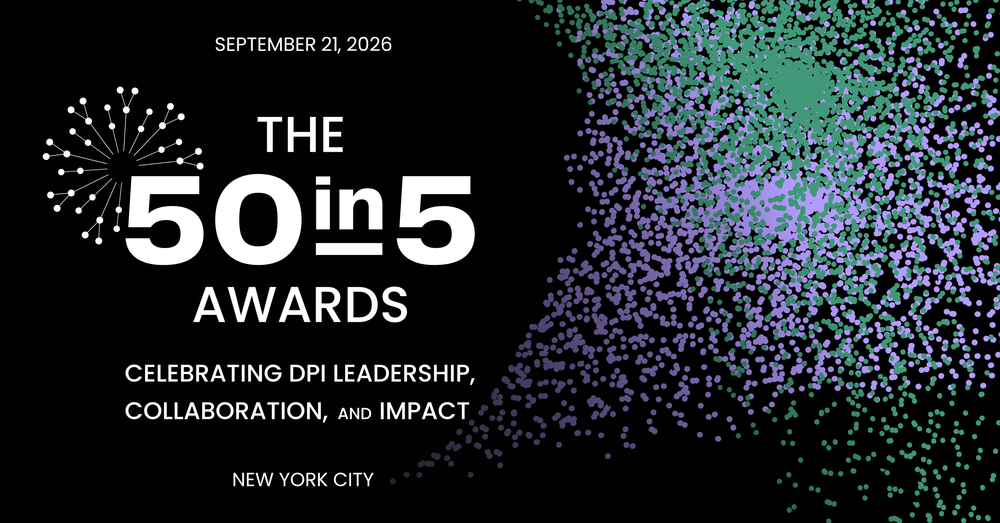
Celebrating Global DPI Milestones: Highlights from the 50-in-5 Awards
Implementing safe, inclusive, and interoperable digital public infrastructure expands access to essential services, fosters strong economies, and delivers impact. By collaborating to share lessons and open technologies rather than going it alone, countries can radically shorten implementation journeys, avoid duplicative costs, and maximise progress.To celebrate these achievements, the 50-in-5 campaign hosted the inaugural 50-in-5 Awards during the 81st UN General Assembly week at The Morgan Library & Museum. Organised by the Digital Public Goods Alliance and Co-Develop, the 50-in-5 Awards recognise the countries and individuals turning digital public infrastructure into real-world progress and sustained human impact.Across the Impact, Collaboration, and Leadership categories, the 50-in-5 Awards highlight practical approaches, from foundational digital IDs reaching entire populations to regional payment networks for small businesses, that other countries can adapt to their own contexts.Read the full announcement to discover the category winners and runners-up honored at the 50-in-5 Awards ceremony, as well as the 40th country to officially join the campaign.
Stay up to date on how digital public goods are making a difference
Subscribe to our monthly newsletter!
Subscribe Now